
Almonds vs Walnuts vs Pistachios: Which Nut Is Best for Weight Loss?
If you're trying to lose weight, you've probably heard the same advice repeatedly: "Eat nuts they're healthy."
But then comes the confusing part.
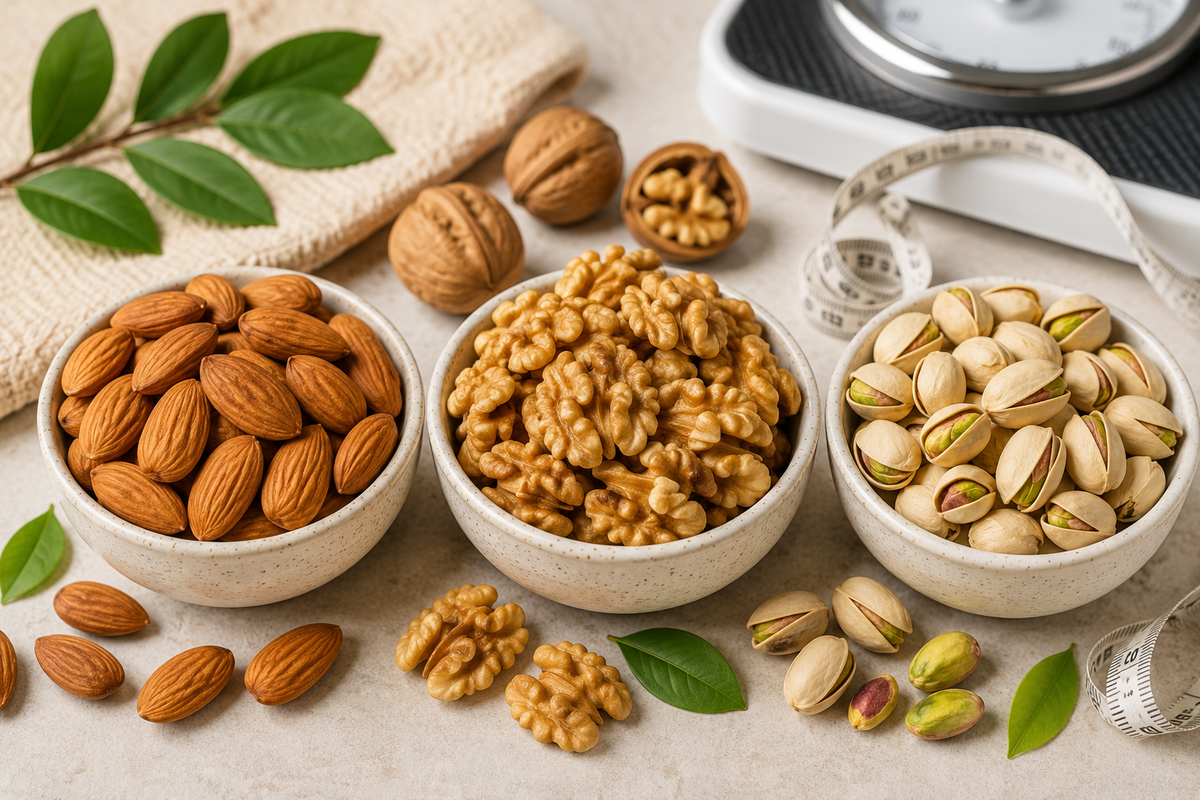
Almonds are everywhere. Walnuts are praised for their omega-3 fats. Pistachios are marketed as a smart snacking option. So which one should you actually choose if your goal is weight loss?
Almonds vs walnuts vs pistachios is there a clear winner?
The answer isn't as simple as picking the nut with the fewest calories.
All three can be part of a healthy weight-management diet. Nuts provide combinations of protein, fiber and unsaturated fats, which can make them satisfying snack options. Research summarized by Harvard's Nutrition Source also suggests that regular nut consumption does not necessarily lead to weight gain despite nuts being relatively calorie-dense.
The real difference comes down to your nutritional priorities, portion size and what the nuts are replacing in your diet.
Let's compare them properly.
Almonds vs Walnuts vs Pistachios: Quick Comparison
Before we get into the details, here's the practical takeaway:
|
Nut |
What It Does Best |
Weight-Loss Advantage |
|
Almonds |
Protein + fiber + vitamin E |
Excellent everyday snack |
|
Walnuts |
Healthy fats + plant-based omega-3 |
Nutrient-dense choice |
|
Pistachios |
Protein + fiber + mindful snacking |
Great for portion awareness |
The important thing is that none of these nuts directly burns body fat.
Instead, they can help you build a more satisfying and nutritious eating pattern.
1. Almonds: The All-Rounder
If you want one nut that's easy to incorporate into everyday eating, almonds are a strong candidate.
A one-ounce serving approximately 23 almonds contains about 165 calories, 6 grams of protein and 3 grams of fiber, along with vitamin E, magnesium and predominantly unsaturated fat.
That combination makes almonds particularly useful as an alternative to processed snacks.
Think about your 5 p.m. hunger.
You could reach for biscuits, chips or a sugary snack or you could have a measured serving of almonds with fruit.
The almonds don't magically accelerate fat loss. They're simply helping you make a better choice.
Why do almonds work well for weight loss?
-
Good source of plant protein
-
Provides dietary fiber
-
Contains predominantly unsaturated fats
-
Convenient and portable
-
Works well as a snack
-
Easy to incorporate into breakfast
The catch
Portion control matters.
Because almonds are calorie-dense, eating several handfuls can significantly increase your daily calorie intake.
2. Walnuts: The Healthy-Fat Champion
Walnuts have a slightly different nutritional personality.
They are particularly known for their alpha-linolenic acid (ALA), a plant-based omega-3 fatty acid. They also provide protein, fiber and unsaturated fats.
For people who want to increase their intake of plant-based healthy fats, walnuts can be an excellent addition.
They work beautifully in breakfast bowls, salads and yogurt or simply as a snack.
Research on nuts overall suggests that incorporating them into a balanced diet does not necessarily result in weight gain, and some studies have linked nut consumption with favorable metabolic and cardiovascular outcomes.
Why walnuts work well for weight loss
-
Rich in unsaturated fats
-
Provides plant-based omega-3 ALA
-
Contains fiber
-
Provides some protein
-
Can make meals more satisfying
The catch
Walnuts are highly energy-dense. If you're eating them specifically for weight management, a small serving is enough.
You don't need a large bowl of walnuts to get their nutritional benefits.
3. Pistachios: The Mindful Snacking Nut
Pistachios have one interesting advantage: they can encourage slower, more mindful eating, particularly when purchased in the shell.
Instead of quickly finishing a snack, shelling pistachios can naturally slow the process down.
Pistachios provide protein, fiber, unsaturated fats and several micronutrients. They can be eaten on their own or added to yogurt, salads and breakfast bowls.
For someone who struggles with mindless snacking, pistachios can be an especially practical option.
Why pistachios work well for weight loss
-
Provides protein and fiber
-
Satisfying crunchy texture
-
Easy to portion
-
Shelling can slow eating
-
Works well as an alternative to processed snacks
The catch
Flavored pistachios can contain significant amounts of added salt, sugar or other ingredients. For everyday snacking, plain or lightly roasted options can be a simpler choice.
So, Which Nut Is Lowest in Calories?
This is where people often make the wrong decision.
Choosing a nut purely because it has slightly fewer calories isn't necessarily the best weight-loss strategy.
The more important question is:
Which nut can you eat in a controlled portion while staying satisfied and avoiding less nutritious foods?
If almonds keep you away from biscuits, they're useful.
If walnuts make your breakfast more satisfying, they're useful.
If pistachios help you slow down and control your snack portion, they're useful.
Behavior matters as much as the nutrition label.
Which Nut Has the Most Protein?
Protein can be useful during weight management because it contributes to satiety and helps support muscle maintenance when combined with appropriate exercise.
Among these three, almonds are particularly notable for their protein content, with approximately 6 grams per one-ounce serving.
However, none of these nuts should be treated as a primary protein source.
Think of them as protein-containing foods that complement a broader diet that may include eggs, dairy, legumes, soy, fish, poultry or other protein sources.
Which Nut Has the Most Fiber?
All three provide dietary fiber, although amounts vary by serving and product.
Fiber can be valuable during weight management because it supports digestive health and can contribute to fullness. Harvard's Nutrition Source recommends getting fiber from a variety of foods, including nuts, seeds, vegetables, fruits, legumes and whole grains.
This is another reason not to obsess over finding one "perfect" nut.
A diet containing different nuts, seeds, vegetables, fruits and whole grains will generally give you a much broader nutritional profile.
Almonds vs Walnuts vs Pistachios for Belly Fat?
Let's tackle the search term everyone wants answered:
Which nut is best for belly fat?
Unfortunately, none.
You cannot selectively burn abdominal fat by eating almonds, walnuts or pistachios.
Abdominal fat decreases as overall body fat decreases. Harvard Health explains that reducing overall body weight can help reduce visceral fat, the deeper abdominal fat associated with several health risks.
So if your goal is a flatter stomach, focus on:
-
Overall calorie balance
-
Protein-rich meals
-
High-fiber foods
-
Regular physical activity
-
Strength training
-
Adequate sleep
-
Consistent eating habits
Nuts can be part of that strategy but they're only one piece of it.
Can You Eat Nuts Every Day While Losing Weight?
Absolutely.
In fact, regularly eating a moderate amount of nuts can be easier to sustain than constantly restricting them.
The trick is portion control.
Instead of keeping a large packet beside your desk, portion your serving into a small container.
You could also combine nuts with other foods:
-
Almonds + apple
-
Walnuts + yogurt
-
Pistachios + berries
-
Chia seeds + oats + almonds
This creates a more balanced snack than simply eating nuts by themselves all day.
What Is the Best Nut for Weight Loss?
If we absolutely had to give each nut a "winner" category:
-
Best All-Rounder: Almonds
Their combination of protein, fiber, vitamin E and healthy fats makes them an excellent everyday option.
-
Best for Healthy Fats: Walnuts
Their ALA omega-3 content gives them a distinctive nutritional advantage.
-
Best for Mindful Snacking: Pistachios
Their texture and shelling process can make them particularly enjoyable for slower, more conscious snacking.
But there is no universal winner.
The best nut for weight loss is ultimately the one you enjoy, can portion properly and can use instead of a less nutritious snack.
How Many Nuts Should You Eat for Weight Loss?
There's no single number that applies to everyone.
A commonly referenced serving for nuts is around 1 ounce (28 grams). For almonds, that's approximately 23 nuts.
Your appropriate portion may be smaller or larger depending on your total calorie requirements, activity level and overall diet.
The easiest habit?
Measure your portion once, then eat it mindfully.
Don't treat nuts as unlimited just because they're nutritious.
A Simple Nutslane Weight-Loss Snack Plan
If you're looking to incorporate nuts into your everyday routine, keep it simple.
-
Monday: Almonds + fruit
-
Tuesday: Walnuts + yogurt
-
Wednesday: Pistachios + fruit
-
Thursday: Almonds + unsweetened yogurt
-
Friday: Walnuts + oats
-
Saturday: Pistachios + fruit
-
Sunday: Mixed nuts in a controlled portion
You don't need to eat all three every day.
Variety beats obsession.
Why Choose Nutslane for Your Everyday Nuts?
The easiest healthy habit is the one that's convenient enough to maintain.
Whether you prefer crunchy almonds, nutrient-rich walnuts or delicious pistachios, having quality nuts available makes it easier to replace highly processed snacks with more nutritious alternatives.
Nutslane brings together everyday nuts, dry fruits and seeds so that healthier snacking doesn't have to feel complicated.
Don't search for a miracle nut. Build a better snack habit.
Explore Nutslane's collection and find the nuts that fit your routine.
Frequently Asked Questions
1. Which is better for weight loss: almonds, walnuts or pistachios?
All three can fit into a healthy weight-loss diet. Almonds are excellent for protein and fiber, walnuts provide ALA omega-3 fats, while pistachios can be useful for mindful snacking.
2. Are almonds better than walnuts for weight loss?
Not necessarily. Both can support a healthy diet when consumed in appropriate portions. Your overall calorie intake and eating pattern matter more than choosing one over the other.
3. Are pistachios good for weight loss?
Yes. Pistachios provide protein, fiber and unsaturated fats and can be a satisfying snack. Portion size remains important.
4. Which nut is best for belly fat?
No nut specifically burns belly fat. Almonds, walnuts and pistachios can be part of a healthy diet that supports overall fat loss.
5. Can I eat almonds, walnuts and pistachios together?
Yes. A mixed-nut serving can provide nutritional variety. Just keep the overall portion controlled because nuts are calorie-dense.
6. How many almonds should I eat for weight loss?
A commonly used serving is around 1 ounce, or approximately 23 almonds. Your individual portion should fit your overall dietary needs.
7. Should I eat nuts at night for weight loss?
You can eat nuts at night if they fit your overall diet. There is no special nighttime fat-burning effect associated with nuts.
8. Can eating nuts every day cause weight gain?
Eating excessive amounts can increase calorie intake, but research does not generally support the idea that moderate nut consumption automatically causes weight gain.
9. Which nut has the most healthy fats?
Walnuts are particularly notable for their plant-based omega-3 ALA, while almonds and pistachios also provide predominantly unsaturated fats.
10. What is the healthiest way to eat nuts?
Choose plain, raw or dry-roasted varieties where possible, watch portions and use nuts to replace less nutritious snacks rather than simply adding them on top of your normal diet.
Final Verdict: Almonds vs Walnuts vs Pistachios
So, which nut wins the weight-loss battle?
The honest answer is:
There isn't one.
Almonds are a fantastic everyday option. Walnuts stand out for their healthy fats and ALA. Pistachios can make mindful snacking more enjoyable.
Rather than asking "Which nut burns the most fat?", ask:
"Which nut can help me make a better food choice every day?"
That's the question that matters.
Because sustainable weight loss isn't built around one miracle ingredient.
It's built around hundreds of small choices repeated consistently.
Nutslane Make every snack count.