
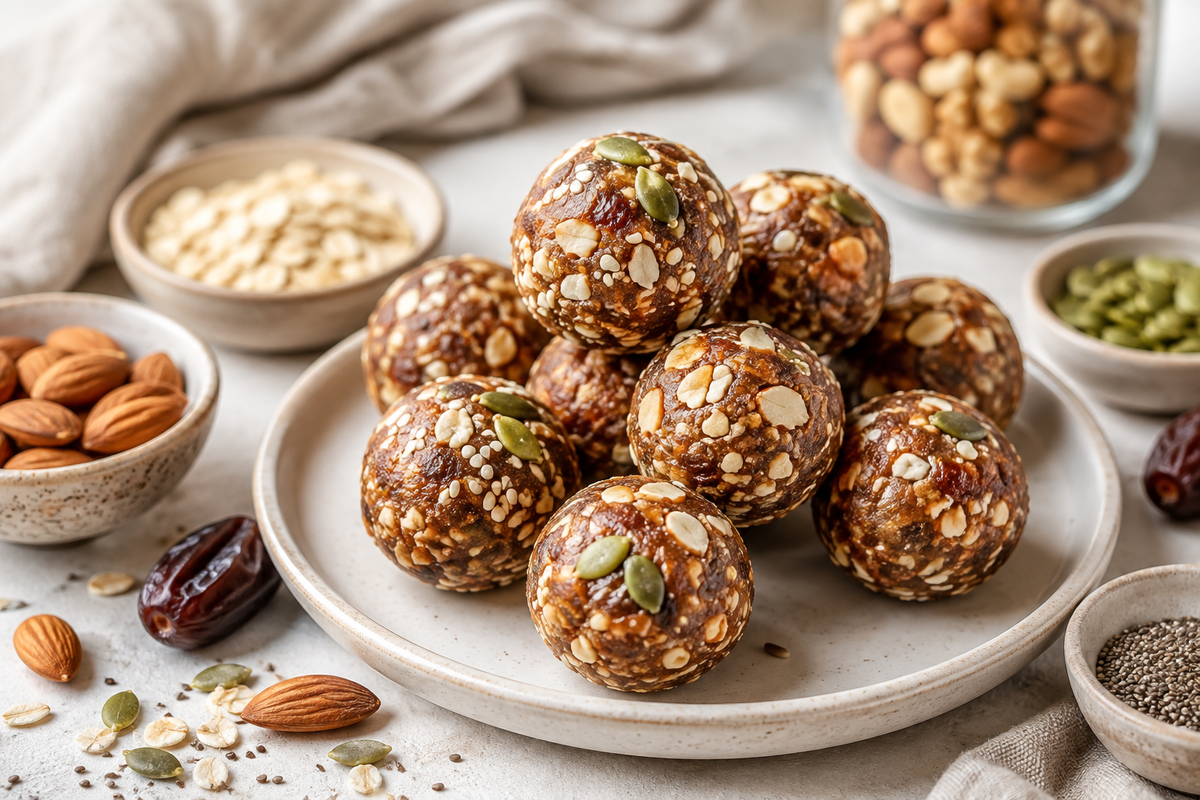
Looking for a quick homemade snack that doesn't require an oven? These no-bake energy balls made with nuts, seeds and dates are an easy option for busy mornings, office snack breaks, pre-workout bites or an afternoon craving.
They require no baking, no complicated equipment and no refined-sugar-heavy ingredients. With a few pantry staples, you can prepare a batch in around 10 minutes and keep them ready for the week.
The best part? You can customise the recipe based on the nuts, seeds and flavours you already have at home.
Why Make No-Bake Energy Balls at Home?
Packaged snacks are convenient, but homemade energy balls give you more control over what goes into your food.
You can choose:
- The type of nuts you prefer
- Your favourite seeds
- The sweetness level
- Whether you want chocolate or coconut
- The texture you like
- The portion size
They're also easy to prepare in advance. Instead of reaching for biscuits or packaged snacks when you're hungry between meals, you can have a few homemade energy balls ready in the refrigerator.
What Are Energy Balls?
Energy balls are small, no-bake snack bites typically made by combining ingredients such as:
- Nuts
- Seeds
- Dates or other dried fruit
- Oats
- Nut butter
- Coconut
- Cocoa or spices
The ingredients are blended or mixed into a sticky dough, shaped into small balls and chilled until firm.
There is no single "correct" energy-ball recipe. That's what makes them so versatile.
No-Bake Nuts & Seeds Energy Balls Recipe
Ingredients
Base Ingredients:
- 1 cup seedless dates
- ½ cup almonds
- ½ cup cashews
- 2 tablespoons pumpkin seeds
- 2 tablespoons sunflower seeds
- 2 tablespoons rolled oats
- 1 tablespoon chia seeds
- 1 tablespoon coconut flakes – optional
- 1 tablespoon peanut or almond butter
- ½ teaspoon cinnamon powder
- 1 teaspoon cocoa powder – optional
- 1–2 teaspoons water, only if required
You can adjust the quantities depending on the consistency you prefer.
1 Prepare the Dates
Dates are important because they help bind the ingredients together.
If your dates are soft, you can use them directly. If they are dry or firm, soak them in warm water for around 5–10 minutes. Drain them thoroughly before using.
Remove the seeds if you're using whole dates.
2 Process the Nuts
Add the almonds and cashews to a food processor.
Pulse them several times until they're broken down into small pieces. Don't blend continuously until they become a fine powder.
A little texture makes the energy balls more enjoyable. You want something closer to coarse crumbs rather than nut flour.
3 Add the Seeds and Oats
Add:
- Pumpkin seeds
- Sunflower seeds
- Chia seeds
- Rolled oats
- Coconut, if using
- Cinnamon
- Cocoa powder, if using
Pulse briefly to combine.
You can also keep some pumpkin or sunflower seeds slightly larger if you prefer a crunchier texture.
4 Add the Dates
Now add your softened dates.
Blend in short pulses until the mixture starts coming together. At first, the mixture may look dry and crumbly. Keep processing.
As the dates break down and combine with the nuts, the mixture should become sticky enough to hold together when pressed between your fingers.
5 Add Nut Butter
Add one tablespoon of peanut butter or almond butter. Process again until everything is combined.
Nut butter isn't absolutely necessary, but it can make the mixture softer and easier to shape while adding another layer of flavour.
If your mixture still feels too dry, add a teaspoon of water at a time and blend again.
6 Check the Texture
Take a small amount of the mixture and squeeze it between your fingers.
If it holds together, you're ready to roll.
If it falls apart immediately, add a little more date or nut butter.
If it feels excessively wet, add a small amount of oats or ground nuts.
Sticky enough to hold its shape + firm enough to roll easily.
7 Roll Into Energy Balls
Take approximately one tablespoon of the mixture. Roll it between your palms to form a small ball.
Repeat until you've used the entire mixture.
Depending on the size, you should get around 12–15 energy balls.
For more consistent portions, use a small spoon or measuring tablespoon.
8 Add a Finishing Touch
This step is optional, but it can make your energy balls look and taste even better.
Roll them in:
- Desiccated coconut
- Crushed almonds
- Sesame seeds
- Chia seeds
- Cocoa powder
- Crushed pumpkin seeds
You can even make different coatings for different flavours.
9 Chill
Place the finished energy balls in an airtight container and refrigerate them for around 30 minutes.
Chilling helps them firm up. You can eat them immediately, but they usually become easier to handle and slightly firmer after refrigeration.
Easy Variations You Can Try
The basic recipe is extremely flexible. Here are some easy combinations you can try.
🍫 Chocolate Energy Balls
Add:
- 1–2 tablespoons cocoa powder
- A few dark chocolate chips, if desired
For a stronger chocolate flavour, coat the finished balls lightly in cocoa powder.
🥥 Coconut & Almond Energy Balls
Use:
- Almonds
- Dates
- Coconut flakes
- Chia seeds
Roll the finished balls in additional coconut.
🥜 Peanut Butter Energy Balls
Replace almond butter with peanut butter.
You can also add a small amount of roasted peanuts for extra crunch.
🍒 Cranberry & Cashew Energy Balls
Add a small quantity of chopped dried cranberries along with cashews and dates.
The combination of sweet dates, tangy cranberries and creamy cashews creates a different flavour profile.
🌻 Seed-Heavy Energy Balls
If you want to reduce the amount of nuts, increase ingredients such as:
- Pumpkin seeds
- Sunflower seeds
- Chia seeds
- Sesame seeds
How to Store Homemade Energy Balls
Because these energy balls contain dates, nuts and other ingredients without preservatives, proper storage is important.
Refrigerator
Store them in an airtight container in the refrigerator. They are best consumed within about one week, depending on the freshness and moisture content of the ingredients.
Freezer
You can also freeze them in an airtight, freezer-safe container. Separate layers with baking paper if needed so they don't stick together.
Move a few portions to the refrigerator when you want to eat them.
Always check for changes in smell, appearance or texture before consuming stored homemade food.
When Can You Eat Energy Balls?
These little bites can fit into several parts of your day.
Morning
Pair one or two with breakfast when you need something quick.
Office Snack
Keep a small portion ready for an afternoon snack.
Before Exercise
Some people enjoy a small serving before physical activity, depending on their individual dietary needs and tolerance.
After Exercise
They can be paired with a protein-rich food for a more complete post-workout snack.
Travel
They can be convenient for short trips when stored appropriately.
They're still a calorie-dense snack because nuts, seeds and dates are energy-rich foods. Portion size matters, especially if you're eating them in addition to regular meals.
Are Nuts and Seeds Good Ingredients for Snacks?
Nuts and seeds provide a combination of nutrients, including healthy unsaturated fats, plant-based protein, fibre, vitamins and minerals, although the exact nutritional profile varies considerably between different nuts and seeds.
Dates and other dried fruits contribute carbohydrates and natural sweetness. That's one reason this recipe doesn't need a large amount of added sugar.
However, "natural" doesn't automatically mean unlimited. Dates, nuts and nut butters can all be energy-dense, so these bites are best viewed as a portion-controlled snack, not something to eat without limits.
Important: Check for Nut Allergies
This recipe contains several common allergens, including tree nuts and peanuts if peanut butter is used.
If you're making these for children, guests or colleagues, check for allergies first.
For a nut-free version, you can experiment with seeds such as:
- Pumpkin seeds
- Sunflower seeds
- Sesame seeds
- Chia seeds
Also check packaged ingredients such as oats, chocolate chips and nut butters for allergen information and potential cross-contamination warnings.
How to Make Better Energy Balls Every Time
- Use soft dates: They bind the ingredients much better than extremely dry dates.
- Don't over-process the nuts: Keeping some texture makes the final snack more enjoyable.
- Add liquid slowly: A little moisture goes a long way.
- Taste before rolling: Adjust cinnamon, cocoa or other flavours before shaping.
- Keep the portions small: Energy balls are meant to be convenient snack portions.
- Refrigerate before serving: This usually improves the texture.
A Simple Formula for Creating Your Own Energy Balls
Once you understand the basic formula, you don't need to follow the recipe exactly.
Easy Energy Ball Formula
1 part sticky dried fruit
1–2 parts nuts and seeds
A small amount of oats or coconut
A flavouring
Optional nut/seed butter
Why This Recipe Works for Busy Indian Households
You don't need an oven. You don't need elaborate cooking equipment. You don't need a long ingredient list.
And you can make a batch using ingredients that are commonly found in Indian kitchens or easily purchased from dry-fruit and grocery stores.
For families that already keep almonds, cashews, dates, pumpkin seeds, sunflower seeds and other dry fruits at home, energy balls can be an easy way to turn those ingredients into a ready-to-eat snack.
It's also a useful recipe for parents looking for alternatives to heavily processed packaged snacks, although individual dietary needs and preferences should always be considered.
Build Your Own Healthy Snack with Nutslane
Looking for quality nuts, seeds and dry fruits for homemade energy balls? Explore Nutslane and stock your pantry with ingredients you can use for simple everyday snacks.
Shop Nuts & SeedsFinal Thoughts
A good snack doesn't have to be complicated.
With dates, nuts, seeds and a few pantry staples, you can make homemade energy balls in around 10 minutes—without turning on the oven.
The recipe is flexible enough to adapt to what you already have at home.
Try almonds and cashews for a classic combination, add pumpkin and chia seeds for extra texture, or introduce cocoa and coconut when you're craving something sweeter.
Make a batch, refrigerate them and you have a convenient homemade snack ready for busy days.
Simple ingredients. No baking. Minimal preparation. Plenty of room to make the recipe your own.
And if you're looking for quality nuts and seeds to build your own snack combinations, Nutslane can naturally become part of that everyday snacking routine.
Make Your Own No-Bake Energy Balls
Stock up on almonds, cashews, chia seeds, pumpkin seeds, sunflower seeds and other ingredients to create your favourite homemade snack.
Explore NutslaneFrequently Asked Questions
1. Can I make energy balls without an oven?
Yes. Energy balls are specifically designed as a no-bake snack. The ingredients are blended or mixed, shaped and refrigerated.
2. How long do homemade energy balls last?
When stored properly in an airtight container in the refrigerator, they can generally be enjoyed for around a week. Storage life depends on the ingredients and moisture content.
3. Can I freeze energy balls?
Yes. Store them in a freezer-safe airtight container. Separate individual layers if needed to prevent them from sticking.
4. What can I use instead of dates?
Dates are useful because they provide sweetness and help bind the mixture. You can experiment with other sticky dried fruits, although the texture may change.
5. Why are my energy balls falling apart?
The mixture may be too dry. Try adding a little more date or nut butter. If necessary, add a very small amount of water.
6. Can I make energy balls without nuts?
Yes. Replace the nuts with additional seeds such as pumpkin seeds, sunflower seeds or sesame seeds. Check all packaged ingredients for potential allergen cross-contact.
7. Do I need to soak dates before making energy balls?
Only if they're dry or firm. Soft dates can generally be used directly. If you soak them, drain them thoroughly before blending.
8. Can children eat homemade energy balls?
They can be included in a child's diet depending on age, dietary needs and allergies. For young children, pay particular attention to texture and choking risks, and consult appropriate pediatric guidance when needed.
9. Are energy balls healthy?
They can be a nutritious snack because nuts and seeds provide fibre, protein and unsaturated fats, while dates provide carbohydrates. However, they're also energy-dense, so reasonable portions are important.
10. Can I add protein powder to energy balls?
Yes, if it suits your diet. You may need to adjust the dates or nut butter because adding powder can make the mixture drier.
This recipe is provided for general educational and informational purposes. Individual nutritional needs, allergies and dietary requirements vary. Always check ingredient labels and seek appropriate professional advice when necessary.