
Why Are Dry Fruits Gifted During Indian Festivals and Weddings?
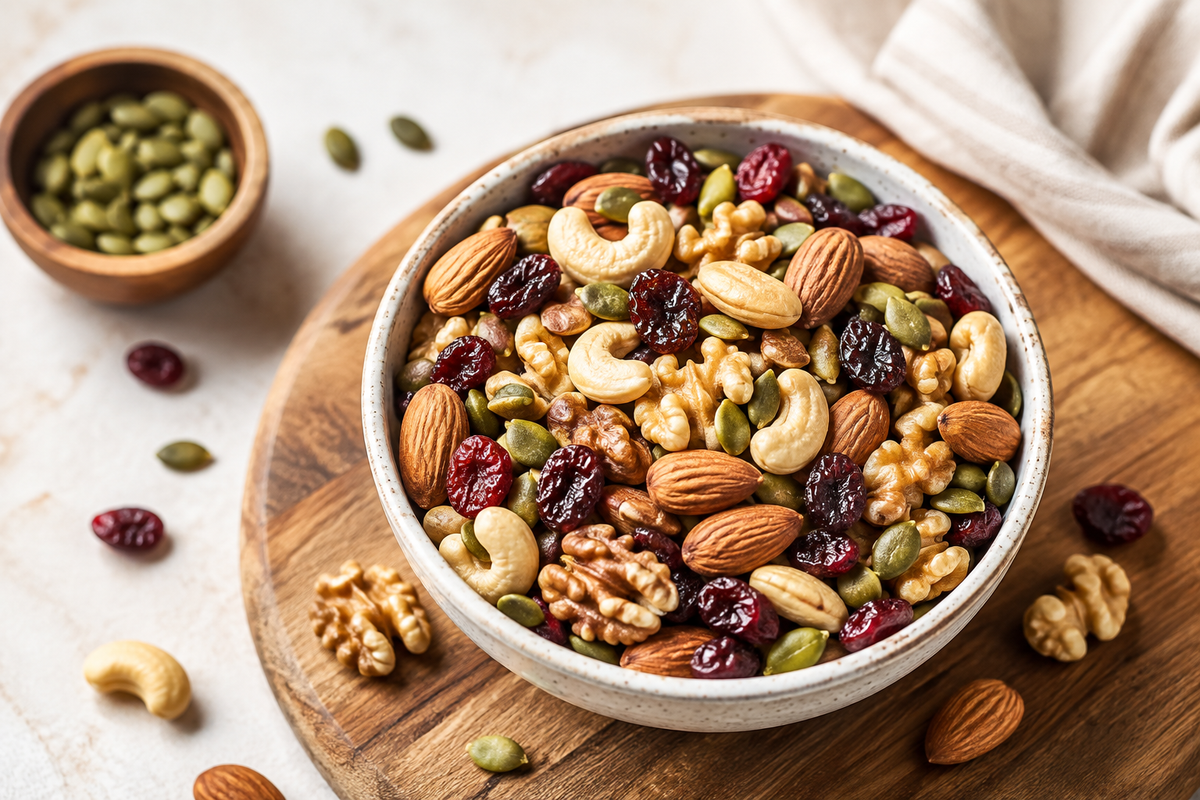
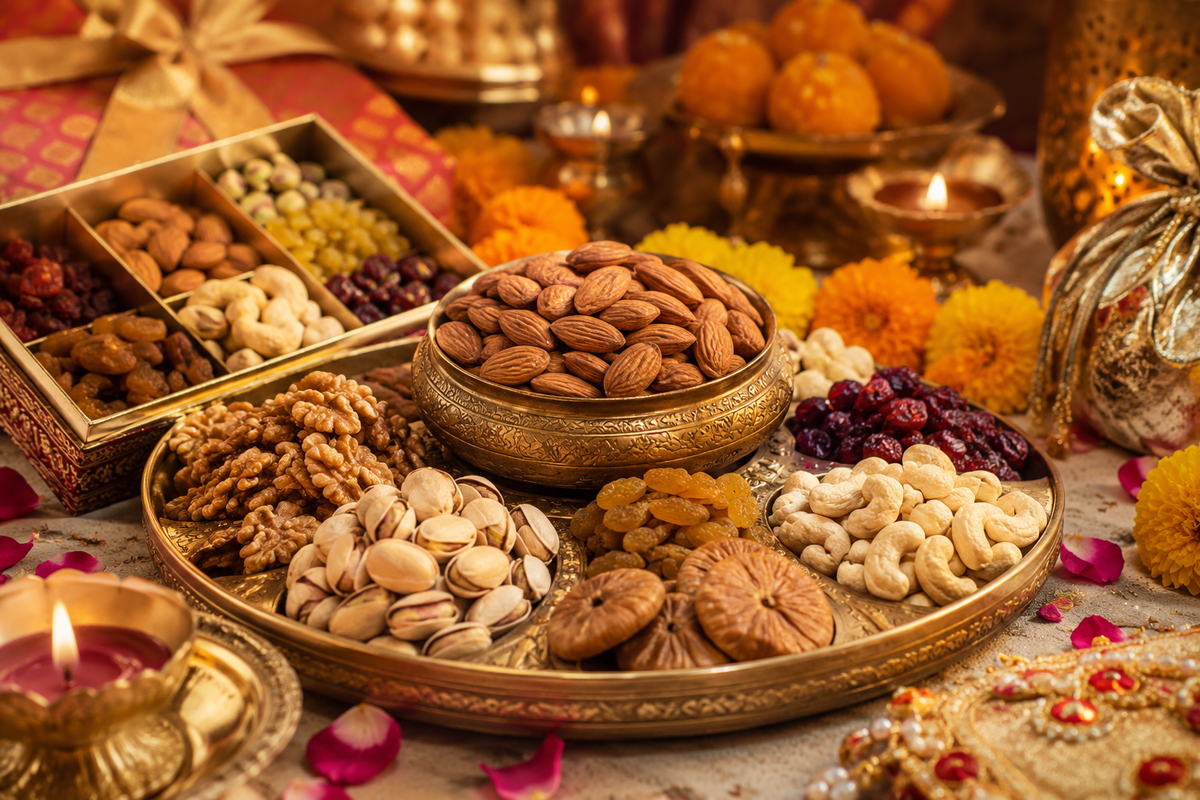
Open a traditional Indian gift box during Diwali, visit a family during a wedding, or attend a festive celebration, and there's a good chance you'll find almonds, cashews, pistachios, raisins or dates somewhere nearby.
Dry fruits have become almost inseparable from Indian celebrations. They appear in beautifully decorated gift hampers, are distributed among guests, added to sweets, used in festive recipes and sometimes placed in elaborate trays as part of traditional hospitality.
But why?
Is it simply because dry fruits taste good?
Not really.
Their popularity comes from a combination of tradition, symbolism, practicality, luxury, hospitality and changing Indian lifestyles.
From a small box of almonds exchanged between families to premium dry-fruit hampers delivered across cities, dry fruits have maintained their place in Indian celebrations for generations.
Table of Contents
- A Tradition That Goes Beyond Food
- Why Were Dry Fruits Considered Special?
- Dry Fruits and Indian Weddings
- Diwali and the Dry-Fruit Gift Box
- Dry Fruits During Raksha Bandhan
- Eid and Other Celebrations
- Dry Fruits in Traditional Indian Recipes
- Why Gift Dry Fruits Instead of Sweets?
- Dry Fruits as a Symbol of Prosperity
- From Simple Boxes to Luxury Hampers
- The Corporate Diwali Gift
- How to Store Dry Fruits
- Are Dry Fruits a Healthier Alternative?
- Frequently Asked Questions
A Tradition That Goes Beyond Food
Food has always played a central role in Indian culture.
Festivals and celebrations aren't only about rituals. They are also opportunities to bring families together, welcome guests and express affection.
In this environment, food becomes a language.
Sweets can represent happiness.
Sharing a meal can represent togetherness.
And gifting dry fruits can represent good wishes, abundance and generosity.
Unlike many fresh foods, dry fruits can be stored for relatively long periods and transported easily. That made them especially practical as gifts in earlier times—and that practicality remains relevant today.
Why Were Dry Fruits Considered Special?
Historically, many nuts and dried fruits were not everyday ingredients for every household.
Their availability, cost and association with long-distance trade contributed to their premium image.
Ingredients such as almonds, cashews, pistachios and certain dried fruits were often used in richer dishes and special preparations.
That created an association between dry fruits and celebration.
When something is not consumed every day, serving it during a festival naturally makes the occasion feel more special. Over time, this became part of Indian gifting and food culture.
Dry Fruits and Indian Weddings
Indian weddings are famous for their scale, hospitality and elaborate food traditions.
Dry fruits have a place at several stages of the celebration.
They may appear in:
- Wedding gift hampers
- Engagement ceremonies
- Family introductions
- Return gifts
- Guest welcome baskets
- Mithai boxes
- Dessert counters
- Traditional recipes
- Premium wedding favours
In many families, gifting dry fruits is also a way of showing respect to relatives and guests.
"We value you, and we want you to share in our happiness."
Why Dry Fruits Make Practical Wedding Gifts
There is another reason dry-fruit hampers work so well.
They are relatively easy to transport and distribute.
Imagine arranging gifts for hundreds of wedding guests. Fresh food may have a limited shelf life. Decorative items may not be useful to everyone. But a well-packed dry-fruit hamper is:
- Consumable
- Easy to carry
- Suitable for families
- Relatively shelf-stable
- Easy to personalise
- Suitable for different budgets
This makes dry fruits a practical gifting choice as well as a traditional one.
Diwali and the Dry-Fruit Gift Box
Perhaps no Indian festival is more strongly associated with gifting than Diwali.
For generations, families have exchanged sweets and dry fruits during the festive season.
The traditional mithai box has increasingly been accompanied—or sometimes replaced—by premium dry-fruit hampers.
Modern Diwali hampers may include:
- Almonds
- Cashews
- Pistachios
- Raisins
- Dates
- Figs
- Seeds
- Chocolate
- Honey
- Tea or coffee
- Decorative items
The packaging has become more sophisticated, but the underlying tradition remains the same:
Sharing prosperity and happiness with others.
Dry Fruits During Raksha Bandhan
Raksha Bandhan is another occasion where food and gifting are closely connected.
Sweets traditionally play a major role, but dry fruits are also increasingly included in Rakhi gift boxes.
For families looking for alternatives to large quantities of sweets, a dry-fruit box can be a convenient option.
Modern Rakhi hampers may combine dry fruits with chocolates, personalised gifts, skincare products or other items.
Again, the format changes with time while the basic tradition of giving remains.
Eid and Other Celebrations
Dry fruits also feature prominently in many Eid and other festive food traditions.
Dates have particular importance in Islamic culture, while nuts and dried fruits are widely used in festive preparations and desserts.
Indian celebrations vary greatly by region, religion and community, but dry fruits frequently cross these boundaries because they are versatile ingredients.
They can be:
- Gifted
- Served to guests
- Added to desserts
- Used in rice dishes
- Included in festive beverages
- Mixed into traditional sweets
This versatility has helped them become a common element across many different celebrations.
The Role of Dry Fruits in Traditional Indian Recipes
Dry fruits aren't only gifts.
They are also an important part of festive cooking.
Kaju Katli
Cashews are transformed into one of India's most recognisable festive sweets.
Badam Halwa
Almonds form the foundation of this rich traditional preparation.
Kheer
Different types of nuts and raisins are often used as toppings or ingredients.
Pulao and Biryani
Raisins, cashews and other nuts can add sweetness, richness and texture.
Sheera and Halwa
Almonds, cashews and raisins frequently appear as garnishes.
Shahi Dishes
Cashews are often blended into gravies to create richness and creaminess.
They are part of both the gift and the meal.
Why Do Indians Gift Dry Fruits Instead of Just Sweets?
Sweets remain incredibly important, but consumer preferences are changing.
Many families are becoming more conscious about how much sugar they consume.
This has created greater demand for gifting options that feel festive without relying entirely on traditional mithai.
Dry fruits fit neatly into this shift.
They still look premium and celebratory, but they can be consumed in smaller portions over time.
This has led to the growth of premium dry-fruit hampers as corporate gifts, wedding gifts and festival presents.
Dry Fruits as a Symbol of Prosperity
There is also a deeper cultural association.
Nuts and dried fruits have historically been perceived as valuable food items.
Gifting something valuable during a celebration can symbolise:
- Prosperity
- Good fortune
- Abundance
- Respect
- Good wishes
- Happiness
This symbolism is particularly powerful during weddings and festivals, where people traditionally wish each other a prosperous future.
So when a family sends a box of almonds and cashews during Diwali, the gift isn't simply about the food inside the box.
It also carries a message.
From Simple Boxes to Luxury Hampers
The Indian dry-fruit gifting market has changed significantly.
Earlier, a family might purchase a simple box from the neighbourhood dry-fruit shop.
Today, consumers can choose from premium hampers featuring carefully selected nuts, elegant packaging and customised branding.
This is particularly visible in:
- Corporate gifting
- Luxury weddings
- Real-estate gifting
- Festival campaigns
- Employee rewards
- Client appreciation
- Influencer gifting
Companies have also adopted dry-fruit hampers because they can be personalised with corporate branding while remaining useful to recipients.
The Corporate Diwali Gift
For businesses, festivals are an opportunity to maintain relationships with employees, customers, vendors and business partners.
Dry-fruit hampers have become a popular corporate gifting choice because they feel premium without being overly personal.
A company can create different packages depending on the recipient.
Standard Hamper: Almonds + cashews + raisins
Premium Hamper: Almonds + cashews + pistachios + dates + figs
Luxury Hamper: Premium nuts + chocolates + gourmet products + customised packaging
The same basic tradition has therefore entered the corporate world.
Make Every Celebration More Special
Looking for quality almonds, cashews, pistachios, raisins, dates and other premium dry fruits for festive gifting or everyday snacking?
Explore Nutslane's collection and discover delicious dry fruits for your family, guests and celebrations.
Shop Dry FruitsThe Modern Problem: Where Do You Keep All These Gifts?
There's a funny side effect of festive gifting.
Your house can suddenly become full of things.
During Diwali, weddings and other celebrations, families may receive multiple boxes of:
- Dry fruits
- Sweets
- Chocolates
- Kitchenware
- Decorative items
- Appliances
- Gift hampers
Some items are used immediately.
Others may remain untouched for weeks or months.
This can quickly create pantry and household storage problems, especially in apartments with limited storage space.
A good habit is to organise gifts as soon as possible. Consume older food items first, label opened containers and store dry fruits appropriately.
For non-food household gifts that you don't need immediately, consider creating a designated storage area rather than allowing them to occupy valuable everyday space.
How to Store Dry Fruits After Receiving Them as Gifts
If you've received multiple dry-fruit boxes during a festival or wedding, don't simply leave everything in decorative packaging indefinitely.
Check the Packaging
Look for the packing date, best-before information and storage instructions.
Transfer Opened Products
Once opened, move dry fruits into clean, airtight containers where appropriate.
Keep Them Dry
Moisture can negatively affect the texture and quality of many dry fruits.
Avoid Excessive Heat
Keep containers away from direct sunlight and hot areas.
Follow Stock Rotation
Use older packages first rather than opening every new box simultaneously.
Don't Ignore Spoilage
If a product develops an unusual smell, visible mould or other signs of spoilage, discard it.
Are Dry Fruits a Healthier Alternative to Sweets?
They can be a useful addition to a balanced diet, but the answer isn't simply "dry fruits are healthy, therefore eat unlimited quantities."
Nuts such as almonds and cashews are nutrient-dense foods, while dried fruits such as raisins and dates contain naturally concentrated sugars.
Some commercially prepared products may also contain added sugar, salt or oils.
Portion size and product choice matter. If you're giving dry fruits as gifts, choosing products with simple ingredients and clear labelling can be a sensible approach.
People with allergies or specific dietary or medical requirements should also check ingredients carefully.
Why This Tradition Is Unlikely to Disappear
Indian celebrations are changing.
Weddings are becoming more personalised.
Festival gifts are becoming more premium.
Corporate gifting is becoming more sophisticated.
Consumers are increasingly conscious of ingredients.
Yet dry fruits continue to survive all these changes.
Why?
- They are traditional.
- They look premium.
- They are versatile.
- They are easy to gift.
- They can be used in cooking.
- They carry cultural meaning.
That combination is difficult to replace.
Frequently Asked Questions
Why are dry fruits gifted during Indian festivals?
Dry fruits are associated with prosperity, abundance, hospitality and good wishes. They are also practical gifts because they are easy to pack, transport and consume over time.
Which dry fruits are commonly gifted in India?
Almonds, cashews, pistachios, raisins, dates and figs are among the commonly gifted dry fruits. The combination varies by region, occasion and budget.
Why are dry fruits popular wedding gifts?
They are considered premium, useful and relatively easy to distribute. They can also be beautifully packaged and customised for weddings.
Are dry fruits traditionally used in Indian sweets?
Yes. Almonds, cashews, pistachios and raisins are widely used in traditional sweets, halwa, kheer and other festive preparations.
How should dry fruits be stored after receiving them as gifts?
Follow the package instructions, keep opened products in suitable airtight containers, protect them from moisture and excessive heat, and rotate older stock first.
Are dry fruits better than sweets for festive gifting?
Dry fruits can be an alternative to traditional sweets, particularly for people who prefer less-sugary gifting options. However, dried fruits and nuts can still be calorie-dense, and some packaged products contain added sugar or salt.
The Tradition Behind the Box
A dry-fruit hamper may look like a simple gift.
But in India, it represents much more.
It connects food with family, celebration with generosity and tradition with modern lifestyles.
From almonds used in festive recipes to cashews packed into wedding hampers and raisins sprinkled over a bowl of kheer, dry fruits have become deeply woven into the way Indians celebrate important moments.
And perhaps that's why the tradition continues.
The packaging may become more luxurious. The recipes may become more modern. The gifts may be ordered online and delivered across hundreds of kilometres.
"This is a moment worth celebrating—and we want to share it with you."
Good food traditions don't disappear. They adapt to the way we live.
Celebrate Every Occasion With Quality Dry Fruits
From Diwali gifting to weddings, Raksha Bandhan and everyday family celebrations, choose quality dry fruits that make every occasion special.
Explore Nutslane