
How to Prepare Soaked Almonds for Maximum Nutritional Benefit
Soaking almonds enhances nutrient absorption and aids digestion. This simple process makes almonds a versatile addition to your diet.
Key Takeaways
- Soaking almonds can enhance nutrient absorption and digestibility.
- Use cool water and soak for 8-12 hours for best results.
- Proper storage is essential to maintain freshness and quality.
Why Soak Almonds?
Nutritional Benefits
Soaked almonds offer improved nutritional benefits compared to raw ones. Soaking helps in breaking down phytic acid, which can inhibit the absorption of essential minerals like zinc, calcium, and iron. By reducing phytic acid, soaked almonds may improve the bioavailability of these minerals, making them easier for the body to absorb. For example, if you incorporate soaked almonds into your breakfast regularly, you might notice improved energy levels due to better nutrient absorption.
Digestive Benefits
Almonds can be difficult to digest due to their hard texture and the presence of enzyme inhibitors. Soaking them softens the nut, making it easier to chew and digest. The process also begins the breakdown of complex starches, which can reduce digestive discomfort and make the nutrients more accessible. This can be particularly beneficial for those with sensitive stomachs, as soaked almonds may be less likely to cause bloating or gas.
How to Properly Soak Almonds

Materials Needed
- Raw almonds (badam)
- Clean water
- Bowl
- Strainer
Step-by-Step Guide
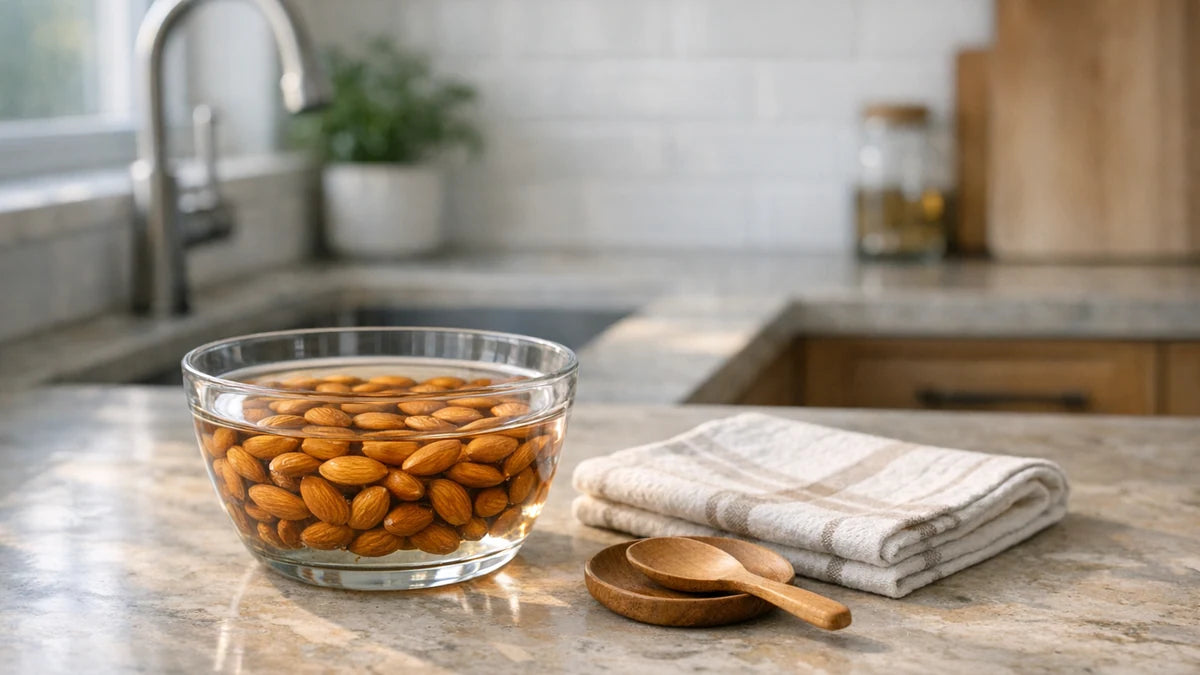
- Place almonds in a bowl and cover with water. Use about twice the volume of water to almonds.
- Leave the almonds to soak at room temperature for 8-12 hours.
- After soaking, drain and rinse the almonds under clean water.
- Peel the almonds if preferred, as the skin may still contain some remaining enzyme inhibitors. Peeling may also improve texture in certain recipes, such as almond paste used in traditional sweets like badam barfi.
Optimal Soaking Time and Conditions
Soaking Time
Almonds should typically be soaked for 8-12 hours. This duration allows sufficient time for the phytic acid to reduce and the almonds to soften. Avoid soaking for less than 8 hours, as it may not give the desired nutritional benefits. Conversely, soaking beyond 12 hours can lead to unwanted fermentation, affecting the taste and safety of the almonds.
Water Temperature
Use cool or room temperature water for soaking almonds. Warm water may encourage bacterial growth if left too long, especially in warmer climates. If you prefer, you can begin the soaking process with tepid water but ensure it's at room temperature throughout the soaking period. This is particularly important in summer months when temperatures can rise significantly, potentially affecting the soaking process.
Snack smarter with Nutslane
Premium nuts, dry fruits and seeds, freshly packed and delivered across India.
Storing Soaked Almonds
Short-term Storage
For short-term storage, place soaked almonds in an airtight container and keep them in the refrigerator. They can typically last up to a week when stored properly. Ensure that they remain dry to prevent mold or spoilage. A simple tip is to line the storage container with a paper towel to absorb any excess moisture, further extending their freshness.
Long-term Storage
If you want to store almonds for longer, consider freezing them. Spread the almonds on a tray to freeze individually before transferring them to a freezer-safe bag. Frozen soaked almonds can last several months but should be thawed gradually in the fridge before use to maintain texture and taste. This method is useful if you want to prepare almonds in bulk for later use, ensuring you always have a nutritious snack on hand.
Common Mistakes to Avoid
Over-Soaking
Over-soaking almonds can lead to a loss of flavor and texture, and may even cause them to ferment. Avoid soaking almonds for more than 24 hours. If you notice a sour smell, discard them. Over-soaked almonds can also become mushy, making them less appealing for certain culinary uses where texture is important.
Improper Storage
Failing to store soaked almonds correctly can lead to spoilage. Always use an airtight container and keep them refrigerated. Ensure they are dry before storage to prevent mold growth. Improperly stored almonds can develop an off flavor, rendering them unsuitable for consumption or cooking.
Incorporating Soaked Almonds into Your Diet
Recipes and Ideas
Soaked almonds are versatile and can enhance various dishes. Add them to smoothies for a creamy texture or use them as a topping on salads for extra crunch. They can also be ground into almond paste for traditional Indian sweets. For instance, a simple badam kheer can be enriched with soaked almonds, adding both flavor and nutrition. Explore more ways to enjoy almonds by checking Why Soaked Almonds are Better Than Raw Almonds.
Conclusion
Soaking almonds is a simple yet effective way to enhance their nutritional and digestive benefits. By following proper soaking and storage methods, you can maximize the health advantages of incorporating almonds into your diet. Consider exploring Nutslane's selection of premium nuts and dry fruits for your next healthy snack or gift option. Remember, enjoying almonds in moderation as part of a balanced diet can contribute to overall wellness.
Frequently Asked Questions
How long should almonds be soaked for?
Almonds should be soaked for 8-12 hours. This duration is sufficient to break down phytic acid and soften the nuts, enhancing their nutritional benefits.
Can I soak almonds overnight?
Yes, soaking almonds overnight is an effective way to prepare them. Ensure you cover them with enough water and keep them at room temperature for best results.
What happens if I over-soak almonds?
Over-soaking almonds can lead to fermentation and spoilage. If soaked for over 24 hours, they may develop a sour smell and should be discarded.
Can soaked almonds be stored in the fridge?
Yes, soaked almonds should be stored in an airtight container in the fridge. They can typically last up to a week when stored properly.
Is there a nutritional difference between raw and soaked almonds?
Yes, soaking almonds can improve nutrient absorption by reducing phytic acid. This makes soaked almonds potentially more nutritious compared to raw ones.
How do I know if my almonds are soaked properly?
Properly soaked almonds will be softer and easier to chew. They should not have a sour smell, which indicates over-soaking or spoilage.
Can soaked almonds be used in baking?
Yes, soaked almonds can be used in baking. They add moisture and can be blended into batters or used as toppings.
Are soaked almonds safe for children?
Soaked almonds are generally safe for children, as they are easier to chew and digest. Always ensure there are no allergies and consult a doctor for specific health concerns.
How can I use soaked almonds in cooking?
Soaked almonds can be used in smoothies, salads, and desserts. They can also be blended into sauces or used as a base for almond milk.
Can I soak almonds in warm water?
It's best to use cool or room temperature water for soaking. Warm water can encourage bacterial growth if left too long.
Do soaked almonds need to be peeled before eating?
Peeled soaked almonds can be easier to digest, but it's a personal preference. The skin contains fiber, so some may choose to leave it on.
Gifting for a festival or your team?
Premium dry fruit gift boxes and bulk orders for every occasion.
This article is for general information only and is not medical advice; please consult a doctor or dietitian for your specific health needs or allergies.