

Article: Checklist: Safely Storing Kaju, Badam, and Other Dry Fruits
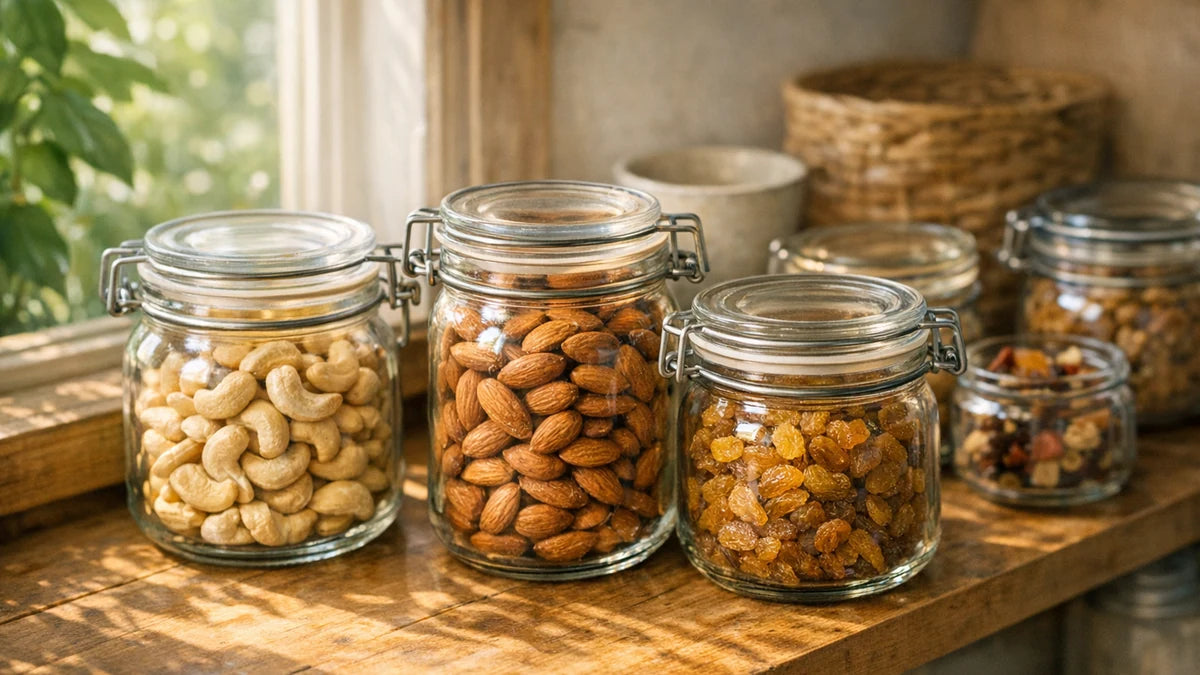
Checklist: Safely Storing Kaju, Badam, and Other Dry Fruits
Properly storing kaju, badam, and other dry fruits ensures they remain fresh and nutritious. This checklist guides you through best practices to maintain their quality.
Key Takeaways
- Store dry fruits in cool, dry places to maintain freshness.
- Use airtight containers to prevent moisture exposure.
- Avoid common storage mistakes like leaving packets open.
- Check for spoilage regularly to ensure safety.
- Different dry fruits may have specific storage needs.
Why Proper Storage Matters
Storing dry fruits correctly is crucial to maintain their flavour and nutritional value. Exposure to air, heat, or moisture can lead to spoilage, making them unsafe to consume. Proper storage methods extend shelf life and ensure you enjoy kaju, badam, and other varieties at their best quality.
Optimal Conditions for Storing Dry Fruits
Temperature and Humidity
Dry fruits should ideally be stored at temperatures below 25°C with low humidity. This environment prevents mould growth and keeps nuts crunchy. In humid climates, consider using a dehumidifier or storing your dry fruits in a cool, dry spot in the house. For those living in regions with extreme weather, utilizing climate-controlled storage such as a refrigerator may be more effective in preserving the texture and taste of dry fruits.
Containers and Packaging
Airtight containers are essential for storing dry fruits to protect them from air and moisture. Glass jars or high-quality plastic containers with tight seals work well. Avoid storing dry fruits in their original packaging once opened, as these are not designed for long-term storage. When selecting containers, consider their size relative to the quantity of dry fruits to minimize air space, which can otherwise promote oxidation and spoilage.
Step-by-Step Storage Checklist

- Transfer dry fruits to airtight containers after opening.
- Label containers with purchase or expiration dates.
- Store in a cool, dry area, away from direct sunlight.
- Check containers monthly for signs of spoilage.
- Consider refrigeration for longer shelf life during hot months.
- Ensure containers are not overcrowded to allow for proper air circulation.
Snack smarter with Nutslane
Premium nuts, dry fruits and seeds, freshly packed and delivered across India.
Common Storage Mistakes to Avoid
Leaving dry fruits in open packets is a frequent error, leading to moisture exposure. Storing them near heat sources can also result in spoilage. Avoid using thin plastic bags for storage, as they do not provide an adequate barrier against air and moisture. An often overlooked mistake includes storing dry fruits with strong-smelling foods, which can lead to flavour transfer and compromise their natural taste.
Special Considerations for Specific Dry Fruits
Kaju
Kaju or cashews should be stored in cool, dry conditions to maintain their creamy texture. An airtight container in the refrigerator can extend their freshness significantly, especially during warmer months. Cashews are particularly susceptible to absorbing odours, so ensure they are stored away from pungent substances.
Badam
Badam or almonds are best kept in airtight containers in a cool, dry place. Refrigeration can help prevent rancidity, particularly in hot climates. Ensure that badam are not stored near pungent foods that can affect their taste. If you prefer almonds with skin, consider blanching and drying them before storage to maintain optimal freshness.
Other Varieties
Each type of dry fruit may have its own specific storage needs. For instance, khajoor (dates) can be kept in the refrigerator to maintain their moisture content. Makhana (fox nuts) should be stored in airtight containers to preserve their crunch. Raisins and apricots, on the other hand, require a slightly more humid environment to prevent hardening, which can be managed by storing them in a fridge with a slight increase in container moisture.
Signs Your Dry Fruits Have Gone Bad
Look out for changes in taste, smell, or appearance to identify spoilage. Rancid smell, mould growth, or a bitter taste are key indicators. If you notice any of these signs, it is best to discard the affected dry fruits to avoid health risks. Additionally, check for any signs of pest infestation, such as holes in nuts or packaging, as these can be a concern in inadequately stored products.
Next Steps: Enhancing Your Dry Fruit Experience
Incorporating well-stored dry fruits into your diet can be delightful. Use them as toppings for your breakfast cereals or mix them into a Healthy Trail Mix. Consider gifting Dry Fruit Gift Boxes during festivals or special occasions for a thoughtful gesture. For culinary enthusiasts, dry fruits can also be a fantastic ingredient in homemade granola bars or a complement to savoury dishes like pulao for added texture and flavour.
Frequently Asked Questions
How long does kaju last when stored properly?
Properly stored kaju can last for up to six months in airtight containers. For extended freshness, consider refrigeration.
Can I store dry fruits in the refrigerator?
Yes, storing dry fruits in the refrigerator can extend their shelf life, especially in warmer climates. Ensure they are in airtight containers to prevent moisture absorption.
What happens if dry fruits are exposed to moisture?
Moisture exposure can lead to spoilage, mould growth, and loss of crunch. Always store dry fruits in airtight containers to prevent this.
Is it safe to store dry fruits in plastic bags?
Thin plastic bags are not recommended for storing dry fruits as they do not provide a strong barrier against air and moisture. Use airtight containers instead.
How can I keep badam fresh for longer?
To keep badam fresh, store them in airtight containers in a cool, dry place. Refrigeration can help prevent rancidity during hot weather.
What are the signs of spoiled dry fruits?
Spoiled dry fruits may have a rancid smell, mould growth, or a bitter taste. If any of these signs are present, it is best to discard the dry fruits.
Can I freeze dry fruits to extend their shelf life?
Yes, freezing dry fruits can extend their shelf life. Ensure they are in airtight containers or freezer bags to maintain quality.
Do different dry fruits require different storage methods?
Yes, different dry fruits may have specific storage needs. For example, dates benefit from refrigeration, while fox nuts require airtight storage to maintain crunch.
What is the best way to store dry fruits during monsoon?
During monsoon, store dry fruits in airtight containers with moisture absorbers. Consider refrigeration to further protect against high humidity.
How do I prevent pests from infesting my dry fruits?
Prevent pests by storing dry fruits in sealed, airtight containers. Regularly check for signs of infestation and keep storage areas clean and dry.
What is the ideal temperature for storing dry fruits?
The ideal temperature for storing dry fruits is below 25°C in a low-humidity environment. Refrigeration can be beneficial in maintaining this condition.
How often should I check my stored dry fruits for freshness?
Check your stored dry fruits monthly for signs of spoilage or pest infestation. Regular inspections help ensure they remain safe and fresh for consumption.
Gifting for a festival or your team?
Premium dry fruit gift boxes and bulk orders for every occasion.
This article is for general information only and is not medical advice; please consult a doctor or dietitian for your specific health needs or allergies.