


Makhana vs Popcorn: Healthier Snack for Weight Loss
Makhana and popcorn are popular choices for weight loss. Knowing their nutritional differences helps you choose the snack that fits your goals.
Key Takeaways
- Makhana is low in calories and rich in protein, making it a good option for weight loss.
- Popcorn offers whole grain benefits and antioxidants, supporting a balanced diet.
- Both snacks can be part of a healthy lifestyle if consumed in appropriate portions.
- Consider potential allergies and prepare each snack healthily for the best results.
Makhana vs Popcorn: The Healthier Choice
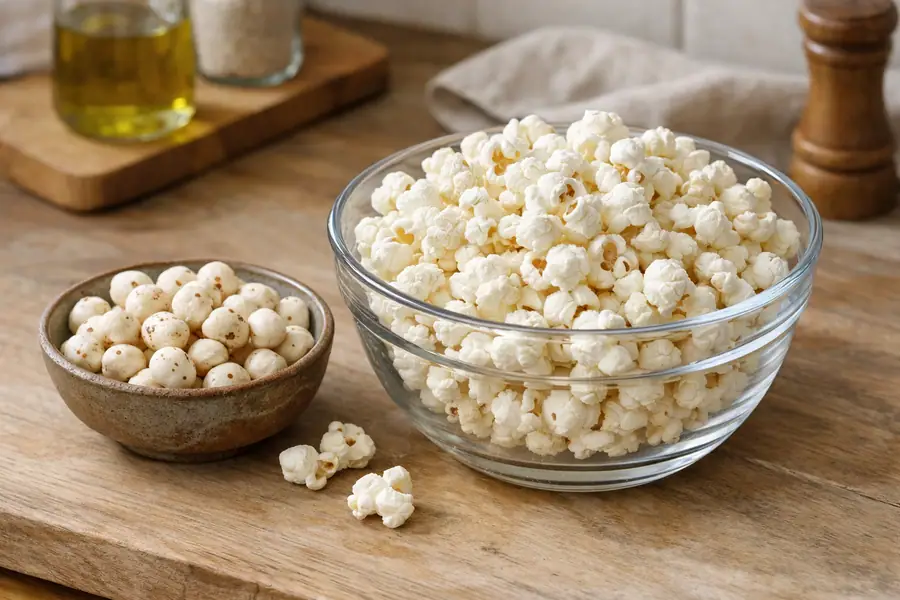
Makhana, or fox nuts, and popcorn are both low-calorie snacks but differ nutritionally. Makhana is higher in protein and fibre, aiding weight loss by promoting satiety. Popcorn, being a whole grain, provides dietary fibre and antioxidants beneficial for heart health. Your choice depends on specific dietary needs and preferences.
Nutritional Benefits of Makhana
Low-Calorie Counts
Makhana is a low-calorie snack, with a typical serving (about 28 g) containing around 100 calories. This is helpful for those monitoring calorie intake. Additionally, its low-calorie nature means you can enjoy it without significantly impacting your daily caloric goals.
Rich in Protein
Protein content in makhana is about 6 g per 28 g, per USDA data. This protein supports muscle maintenance and promotes fullness, aiding weight management. Incorporating makhana into your diet can help meet daily protein requirements, especially if you follow a vegetarian or vegan diet.
Good Source of Fiber
Makhana is a decent source of dietary fibre, supporting digestive health and appetite control. Including fibre-rich foods like makhana can assist in maintaining a healthy weight. Consuming fibre can also help regulate blood sugar levels, an important factor for those managing diabetes or insulin sensitivity.
Nutritional Benefits of Popcorn
Whole Grain Benefits
Popcorn is a whole grain, retaining its bran, germ, and endosperm. Whole grains can reduce the risk of heart disease and promote digestive health. By choosing popcorn, you are adding essential nutrients and fibre to your diet, which can contribute to long-term health benefits.
Antioxidant Properties
Popcorn contains polyphenols, antioxidants that combat oxidative stress. These may contribute to overall health when part of a balanced diet. Antioxidants in popcorn can help protect cells from damage and may reduce inflammation, which is linked to various chronic diseases.
Snack smarter with Nutslane
Premium nuts, dry fruits and seeds, freshly packed and delivered across India.
Comparing Makhana and Popcorn for Weight Loss
| Attribute | Makhana | Popcorn |
|---|---|---|
| Calories (per 28 g) | Approx. 100 | Approx. 110 |
| Protein | 6 g | 3 g |
| Fibre | Good source | High |
| Antioxidants | Limited | Rich |
| Fat Content | Low | Minimal |
Both makhana and popcorn can support weight loss, but their benefits cater to different needs. Makhana may be preferable for higher protein, while popcorn is ideal for fibre and antioxidants. Additionally, makhana's low-fat content makes it suitable for those watching their fat intake.
Portion Control and Serving Suggestions
Recommended Serving Sizes
A recommended serving size for makhana is about 28 g, while for popcorn, it's around 3 cups of air-popped corn. Keeping servings in check helps maintain a balanced diet. Overeating either snack can lead to excessive caloric intake, negating their weight loss benefits.
Healthy Preparation Methods
- For makhana, roast them with minimal oil and spices like black pepper or turmeric for flavour. Try adding a pinch of cumin for a unique taste.
- Air-pop popcorn to avoid extra calories from oil. Season with herbs or nutritional yeast instead of butter for a healthier option. A sprinkle of paprika can also add a smoky flavour without additional calories.
Potential Allergies and Sensitivities
Some individuals may be allergic to nuts, including makhana. Symptoms can range from mild to severe, so introduce makhana carefully into your diet. Popcorn allergies are rare, but some people may react to corn. Consult a healthcare provider if you have concerns about food allergies. Always read ingredient labels, especially if purchasing flavoured varieties, as they may contain allergens.
Conclusion: Making the Right Snack Choice
Choosing between makhana and popcorn depends on your nutritional needs and taste preferences. Makhana offers higher protein, while popcorn provides fibre and antioxidants. For a balanced diet, consider alternating between these snacks. Prepare them healthily and consume them in appropriate portions to support weight loss goals. For more snack options, explore Nutslane's range of premium nuts, dry fruits, and seeds to snack smarter and healthier.
Frequently Asked Questions
Is makhana good for weight loss?
Yes, makhana is a good choice for weight loss due to its low calorie and high protein content, which help in promoting satiety.
Can I eat popcorn every day for weight loss?
Yes, you can include popcorn in your diet daily, but opt for air-popped varieties and keep serving sizes moderate to manage calorie intake.
How many calories are in makhana?
Makhana contains approximately 100 calories per 28 g serving, making it a low-calorie snack option.
Is popcorn a low-calorie snack?
When air-popped, popcorn is a low-calorie snack, providing about 30 calories per cup, making it suitable for weight management.
What are the best ways to prepare makhana?
Roasting makhana with minimal oil and adding healthy spices such as turmeric or black pepper enhances its flavour without adding extra calories.
Can makhana cause allergies?
While rare, nut allergies, including to makhana, can occur. It's advisable to introduce it slowly into your diet and consult a healthcare provider if any allergic reactions occur.
Is it better to eat popcorn without butter?
Yes, consuming popcorn without butter is healthier, as it reduces added calories and saturated fats. Use nutritional yeast or herbs for flavour instead.
How much makhana should I eat per day?
Consuming about 28 g of makhana per day is recommended to enjoy its benefits while maintaining portion control.
Are there any side effects of eating too much popcorn?
Overconsumption of popcorn, especially when prepared with butter and salt, can lead to weight gain and increased sodium intake. Stick to air-popped varieties and moderate portions.
What are the nutritional benefits of fox nuts?
Fox nuts, or makhana, are low in calories, high in protein, and a good source of fibre, making them beneficial for weight management and digestive health.
Can makhana be eaten during fasting?
Yes, makhana is often consumed during fasting in India due to its light nature and nutritional benefits. It's important to eat it in appropriate serving sizes.
Is air-popped popcorn healthier than microwave popcorn?
Air-popped popcorn is generally healthier than microwave popcorn, as it avoids added fats and preservatives typically found in microwave options.
Gifting for a festival or your team?
Premium dry fruit gift boxes and bulk orders for every occasion.
This article is for general information only and is not medical advice; please consult a doctor or dietitian for your specific health needs or allergies.