
Top 10 Amazing Benefits of Sunflower Seeds for Health, Skin, Heart and Weight Management
When people think of healthy snacks, almonds, walnuts, and chia seeds often come to mind. However, one underrated superfood that deserves equal attention is sunflower seeds. These tiny nutritional powerhouses are packed with healthy fats, protein, fiber, vitamins, minerals, and antioxidants that support overall wellness.
Whether sprinkled over salads, blended into smoothies, mixed into trail mixes, or eaten as a crunchy snack, sunflower seeds provide numerous health benefits in every bite.
In this guide, we'll explore the top benefits of sunflower seeds, their nutritional value, how to consume them, and why they deserve a place in your daily diet.
Table of Contents
- What Are Sunflower Seeds?
- Nutritional Value of Sunflower Seeds
- Top 10 Benefits of Sunflower Seeds
- Benefits of Sunflower Seeds for Women
- Benefits of Sunflower Seeds for Men
- Best Ways to Eat Sunflower Seeds
- Are Sunflower Seeds Good for Weight Loss?
- How Much Sunflower Seeds Should You Eat Daily?
- Possible Side Effects
- FAQs
What Are Sunflower Seeds?
Sunflower seeds are the edible seeds harvested from the sunflower plant (Helianthus annuus). They are commonly found inside the large flower heads of sunflowers and are known for their mild nutty flavor and impressive nutritional profile.
Sunflower seeds can be consumed in various forms:
- Raw
- Roasted
- Salted
- Sprouted
- Sunflower seed butter
- Added to recipes and snacks
Due to their rich nutrient content, sunflower seeds are widely recognized as a nutrient-dense superfood.
Nutritional Value of Sunflower Seeds
Despite their small size, sunflower seeds contain a wide range of essential nutrients that support multiple bodily functions.
Key Nutrients Found in Sunflower Seeds
- Vitamin E
- Healthy Unsaturated Fats
- Protein
- Dietary Fiber
- Magnesium
- Selenium
- Zinc
- Iron
- Copper
- B Vitamins
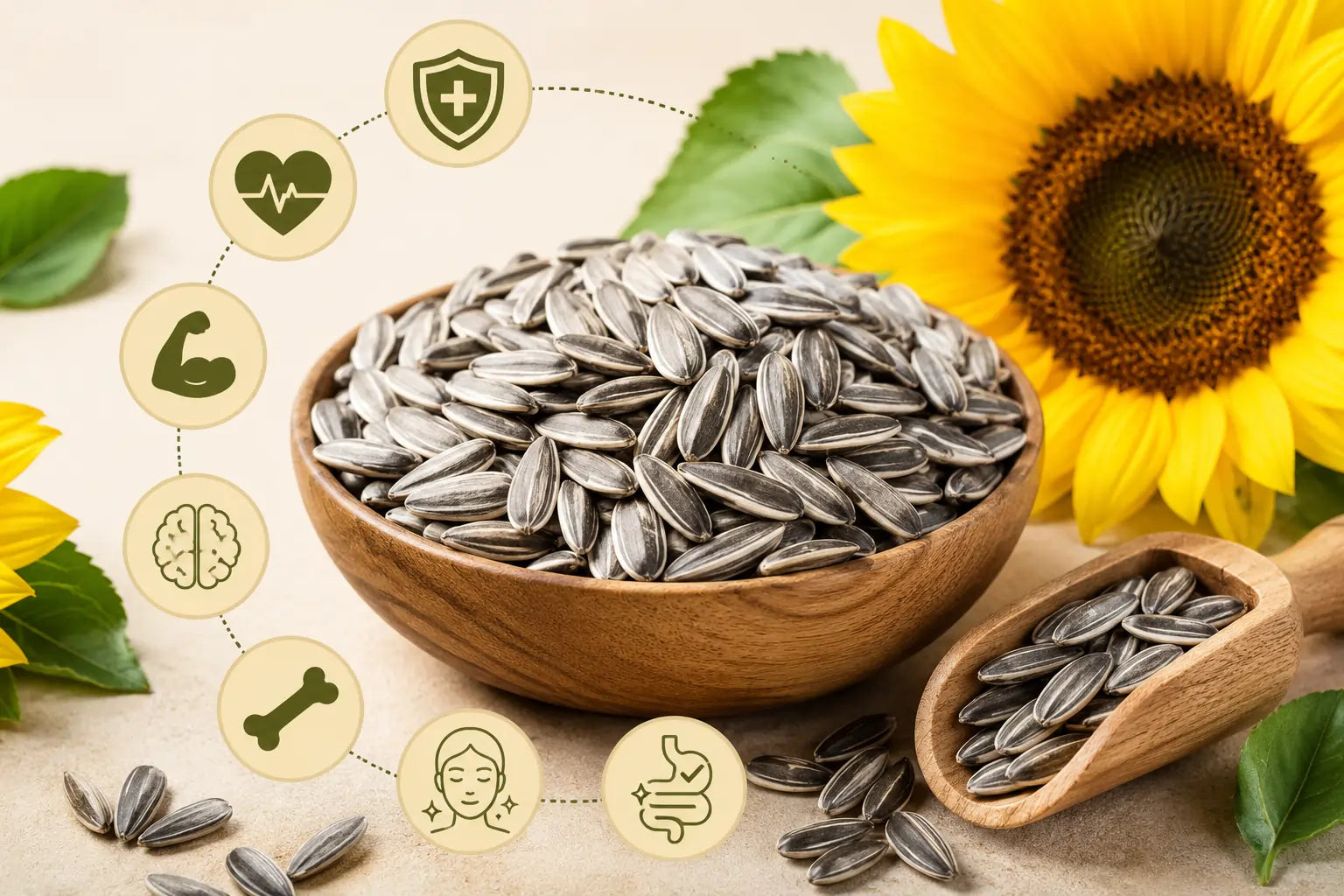
These nutrients help support immunity, heart health, skin health, digestion, energy production, and overall wellness.
Top 10 Health Benefits of Sunflower Seeds
1. Rich in Antioxidants
Sunflower seeds are exceptionally rich in Vitamin E, a powerful antioxidant that helps protect cells from oxidative stress and free radical damage.
- Supports healthy aging
- Reduces oxidative stress
- Helps maintain skin health
- May reduce inflammation
2. Supports Heart Health
The healthy fats, magnesium, and antioxidants present in sunflower seeds contribute to cardiovascular wellness.
- Supports healthy cholesterol levels
- Promotes proper blood circulation
- Helps maintain normal blood pressure
- May reduce inflammation associated with heart disease
3. Promotes Healthy Skin and Hair
Sunflower seeds are considered a beauty-friendly food due to their Vitamin E and healthy fat content.
Skin Benefits
- Supports skin hydration
- Helps maintain a natural glow
- Protects against environmental stressors
- Supports healthy skin texture
Hair Benefits
- Nourishes the scalp
- Supports stronger hair roots
- Promotes overall hair health
4. Helps Boost Immunity
Sunflower seeds contain important immune-supporting nutrients including zinc, selenium, and Vitamin E.
- Supports healthy immune function
- Protects against oxidative stress
- Contributes to overall wellness
5. Excellent Source of Plant-Based Protein
Sunflower seeds are a valuable protein source for vegetarians, vegans, and fitness enthusiasts.
- Supports muscle repair and growth
- Helps maintain healthy tissues
- Promotes satiety
- Supports energy levels
6. Supports Healthy Digestion
The dietary fiber present in sunflower seeds contributes to digestive wellness.
- Supports smooth digestion
- Promotes gut health
- Helps maintain bowel regularity
- Supports metabolic health
7. May Help With Weight Management
Although calorie-dense, sunflower seeds can support weight management when consumed in moderation.
- Protein promotes fullness
- Fiber helps control hunger
- Healthy fats provide sustained energy
- May reduce unnecessary snacking
8. Supports Bone Health
Sunflower seeds contain magnesium, phosphorus, and copper, which are important minerals for maintaining strong bones.
- Supports bone density
- Helps maintain skeletal strength
- Important for healthy aging
9. Helps Maintain Energy Levels
The combination of healthy fats, protein, and B vitamins helps provide sustained energy throughout the day.
- May reduce fatigue
- Supports natural energy production
- Ideal as a pre-workout snack
- Helps avoid energy crashes
10. May Help Reduce Inflammation
Chronic inflammation is linked to various health concerns. The antioxidants and healthy fats found in sunflower seeds may help support the body's natural inflammatory response.
- Supports long-term wellness
- Promotes healthy cellular function
- May help reduce oxidative damage
Benefits of Sunflower Seeds for Women
Sunflower seeds contain nutrients that can support women's overall health and wellness.
- Supports healthy skin
- Promotes stronger hair
- Supports bone health
- Helps maintain energy levels
- Provides antioxidant protection
Benefits of Sunflower Seeds for Men
Men can also benefit from adding sunflower seeds to their daily nutrition plan.
- Supports heart health
- Promotes muscle recovery
- Provides plant-based protein
- Supports immunity
- Helps maintain energy levels
Best Ways to Eat Sunflower Seeds
- Eat raw or roasted
- Add to salads
- Mix into yogurt
- Blend into smoothies
- Sprinkle over oatmeal
- Use in granola
- Add to trail mix
- Include in baking recipes
Their crunchy texture and mild flavor make them suitable for both sweet and savory dishes.
Are Sunflower Seeds Good for Weight Loss?
Yes. Sunflower seeds contain protein, fiber, and healthy fats that can help promote fullness and reduce overeating when consumed in moderation.
Because they are calorie-dense, portion control remains important for achieving weight management goals.
How Much Sunflower Seeds Should You Eat Daily?
For most healthy adults, a serving of approximately 1–2 tablespoons per day is generally considered sufficient to enjoy the nutritional benefits without excessive calorie intake.
Are There Any Side Effects?
Sunflower seeds are generally safe for most individuals. However, excessive consumption may lead to:
- Higher calorie intake
- Digestive discomfort
- Excess sodium intake if heavily salted
Choose unsalted or lightly roasted sunflower seeds whenever possible. Individuals with seed allergies should avoid consumption.
Final Thoughts
Sunflower seeds may be small, but they are packed with nutrients that support heart health, immunity, digestion, skin health, bone strength, and energy levels.
Their delicious taste, versatility, and impressive nutritional profile make them one of the easiest superfoods to include in a healthy daily routine.
Looking for premium-quality sunflower seeds? Explore our carefully selected collection of healthy nuts and seeds for freshness, taste, and nutrition.
Frequently Asked Questions (FAQs)
1. What are the health benefits of sunflower seeds?
Sunflower seeds support heart health, immunity, digestion, skin wellness, and overall nutrition.
2. Are sunflower seeds good for weight loss?
Yes, their protein and fiber content may help promote fullness when consumed in moderation.
3. Can sunflower seeds improve skin health?
Yes, Vitamin E and healthy fats help support healthy, glowing skin.
4. Are sunflower seeds rich in protein?
Yes, they contain plant-based protein that supports muscle recovery and energy.
5. How should I eat sunflower seeds?
You can enjoy them raw, roasted, or added to salads, smoothies, yogurt, and oatmeal.
6. How many sunflower seeds should I eat daily?
Approximately 1–2 tablespoons per day is generally recommended.
7. Are sunflower seeds good for heart health?
Yes, their healthy fats and antioxidants support cardiovascular wellness.
8. Can sunflower seeds help digestion?
Yes, their fiber content supports digestive health and regularity.
9. Are roasted sunflower seeds healthy?
Yes, especially when lightly roasted and unsalted.
10. Can sunflower seeds be eaten every day?
Yes, moderate daily consumption can be part of a healthy and balanced diet.